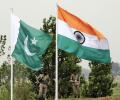
The United States, the United Nations and the European Union have welcomed the announcement by the militaries of India and Pakistan to strictly observe all agreements on ceasefire along the Line of Control (LoC) in Jammu and Kashmir and other sectors, and hoped that it would lead to greater peace and stability in South Asia.

China on Tuesday confirmed that it has reached an agreement with India to end the standoff between the two armies in eastern Ladakh.

The representatives of outfits, including three breakaway factions, deposited their arms to the chief minister at a ceremony organised by the home department Guwahati.
'...he keeps his campaign promises, does what he said he will do which led to his huge victory.'

China on Thursday said the meeting between Prime Minister Narendra Modi and Chinese President Xi Jinping in Russia's Kazan on Wednesday carries a "great significance" as they reached an "important common understandings" to improve the bilateral ties.
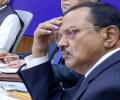
National Security Advisor Ajit Doval arrived in Beijing on Tuesday to take part in the India-China Special Representatives' talks to be held on Wednesday aimed at restoring the bilateral ties stalled for over four years' due to the military standoff in eastern Ladakh.

The release of Pakistan's envoy to Afghanistan was part of a deal between the government and the local Taliban, under which they will swap about 330 prisoners after signing a formal peace agreement in the restive northwest tribal areas. The Taliban wanted 250 militants, currently in the government's custody, to be swapped with 80 soldiers and government officials, who had been taken hostage by the rebels. Azizuddin was handed over by militants to authorities at Razmak.
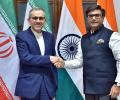
India's Foreign Secretary Vikram Misri will travel to Beijing for a two-day trip beginning Sunday, marking the second high-profile visit from India to China in less than one-and-a-half months. The visit comes amidst ongoing border tensions and follows a recent disengagement pact between the two countries in eastern Ladakh. The Foreign Secretary-Vice Minister mechanism meeting will focus on the next steps for India-China relations, including in the political, economic, and people-to-people domains. The decision to revive this bilateral mechanism was taken at a meeting between Prime Minister Narendra Modi and Chinese President Xi Jinping in Kazan in October.
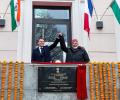
Prime Minister Narendra Modi and French President Emmanuel Macron have called for enhancing trade and investment ties between their countries and committed to further deepening their engagement in the Indo-Pacific. They discussed a full spectrum of bilateral relations, including key global and regional issues, and stressed the urgent need for reform in the United Nations Security Council. The leaders also underscored their commitment to ensuring the global AI sector can drive positive social, economic, and environmental outcomes.
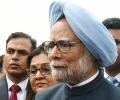
Condolences have poured in from across the globe, including from the United States, Canada and Sri Lanka following the demise of former Prime Minister Manmohan Singh.
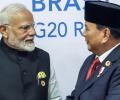
India is trying hard to erase Indonesia's wariness about New Delhi, building security cooperation in the Indian Ocean and Pacific Ocean. If Indonesia decides to buy the Brahmos missile, it would further strengthen relations between the world's most populous nation and the most populous Islamic country.
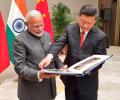
China's foreign ministry on Monday parried questions on a possible meeting between Prime Minister Narendra Modi and President Xi Jinping on the sidelines of the BRICS summit in Russia this week.

India and China on Monday decided to resume the Kailash Mansarovar Yatra as the two sides agreed to take certain people-centric steps to 'stabilise and rebuild' ties.

After the 1962 War with China, there was a demand to forge greater defence cooperation between India and the West. One such voice was that of Sudhir Ghosh, a distinguished MP, to tie up strategic cooperation with the USA immediately after the Chinese attack on India, recalls Rup Narayan Das.

Jimmy Carter, the 39th US president and a champion of peace and human rights, has died at the age of 100. Carter, who was known for his work with the Carter Center, promoting democracy and conflict resolution, was also a close friend of India. He visited the country in 1978, forging a lasting relationship between the two nations.
As Egyptian President Hosni Mubarak fights a seemingly lost battle against protesters seeking his ouster, Israel has asked the global community to make it clear to any regime in the country that it must abide fully by the peace agreement with the Jewish state.
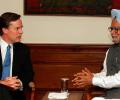
The India-US nuclear deal was aimed at ending India's nuclear isolation and nuclear apartheid, recalls Rup Narayan Das.

Jaishankar said, "The immediate part which awaits us is what we call the de-escalation, which is the build-up of forces along the Line of Actual Control."

Addressing the Manipur assembly during the commencement of the budget session, she said that 198 companies of central armed police forces and 140 army columns have been deployed along with state forces to maintain law and order.
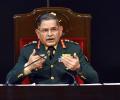
The General said it was "too early" to take a call on the role of Bangladesh, where a change in government may bring about a change in the relationship between it and India.
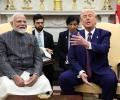
'Trump administration wanted a positive tone at this summit, but there was still some anxiety that there could be some awkward moments -- and there were not.'
There are indications that Taliban commander Hafiz Gul Bahadar has scrapped his longstanding peace agreement with the government of Pakistan, reports Tahir Ali.

Jaishankar said that both sides also exchanged views on the next steps in the India-China bilateral ties.

Iran and Saudi Arabia have agreed to re-establish diplomatic relations and reopen embassies after talks in Beijing between officials from the two rival Middle East powers, Iranian state media reported on Friday.
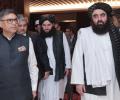
India's Foreign Secretary Vikram Misri has arrived in Beijing for a two-day visit during which he will hold talks with Chinese officials. The visit comes amid ongoing efforts to de-escalate tensions along the Line of Actual Control (LAC) in eastern Ladakh and to resume bilateral cooperation in various fields, including the Kailash Mansarovar Yatra.
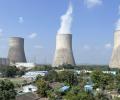
In a significant move, the United States on Wednesday removed restrictions on three Indian nuclear entities, over a week after National Security Advisor Jake Sullivan announced that Washington was finalising steps to 'remove' hurdles for civil nuclear partnership between Indian and American firms.

India's External Affairs Minister S Jaishankar has stated that peace and tranquility in border areas are essential for the development of bilateral ties with China. He said India will be discussing de-escalation and effective management of activities in border areas with China in the coming days, following the completion of troop disengagement in eastern Ladakh. Jaishankar emphasized the importance of respecting the Line of Actual Control (LAC), maintaining the status quo, and adhering to past agreements. The disengagement phase allows for discussions on other aspects of bilateral engagement, with national security interests prioritized. However, the statement sparked an uproar in the Rajya Sabha, with Opposition MPs demanding clarifications that were disallowed by the Chair, leading to a walkout.


Asked about the recent meeting between Modi and Xi, and if Russia had any role in it, Alipov said, "We have not played any role in it, but we are happy that it took place in Kazan... We wholeheartedly welcome the meeting."
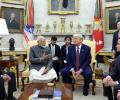
India and the United States have agreed to deepen their strategic partnership in several key areas, with President Donald Trump announcing plans to provide India with F-35 fighter jets and billions of dollars in military supplies. The two leaders also discussed energy cooperation, critical technologies, connectivity, and countering terrorism. They agreed to work together on the India-Middle East-Europe Economic Corridor, and Trump noted India's reforms to welcome US nuclear technologies. Prime Minister Modi said the two countries can shape a better world through their cooperation. Both leaders also addressed the Russia-Ukraine conflict, with Modi stressing India's commitment to peace.
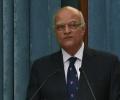
Former National Security Advisor (NSA) Shivshankar Menon has stated that the political dynamics between India and Pakistan have resulted in a "controlled level of hostility" that benefits the ruling elites in both nations. Speaking at the Kerala Literature Festival, Menon described Pakistan as a "brand new state" still grappling with its national identity. He argued that India's foreign policy towards Pakistan is influenced by its domestic politics, resulting in an uneasy equilibrium characterized by a "controlled level of hostility." Menon also questioned the concept of a multipolar world, stating that the current global order is merely "confused." He emphasized that the United States remains the world's true military hegemon, while other nations, including China, are regional powers. Menon further argued that there is no binding international order, leading to a state of "between orders." He highlighted the absence of definitive international agreements on crucial issues in recent decades.
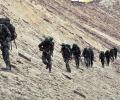
During the meeting, it was reiterated that "restoration of peace and tranquillity, and respect for the LAC are the essential basis for restoration of normalcy in bilateral relations", it said.

Misri is also likely to brief the parliamentary panel on the recent upswing in India's ties with China following the agreement to resume patrolling at friction points along the Line of Actual Control in eastern Ladakh.

India and China on Wednesday held 'constructive' and 'forward-looking' diplomatic talks to resolve the over four-year border standoff along the Line of Actual Control (LAC) in eastern Ladakh but there was clear no indication of any breakthrough.

'This committee underscores the Indian State's longstanding conventional approach to leverage top-down conflict management in North East India in general and Manipur in particular.' 'Trying to 'manage' violent conflicts top-down has not worked in the past, and apparently does not seem to work this time either.'

'The touchstone is reciprocity which will be applied to friends and foes alike.' 'It will be a bitter pill to swallow.'

But there is a bigger issue that both of us have brought forces close up and in that sense there is a militarisation of the border, he said.

Jaishankar described as a "reasonable supposition" to expect some improvement in the relations between India and China following the last round of disengagement but hesitated to say that there could be a reset of the ties.

The new interlocutor, AK Mishra, held talks with NSCN-IM chief negotiator Thuingaleng Muivah at Dimapur in Nagaland.
Coupled with the fact that arms were recovered at the instance of Jamir, there is also evidence showing running of parallel government which was never acknowledged under any peace accord, the judge said.
